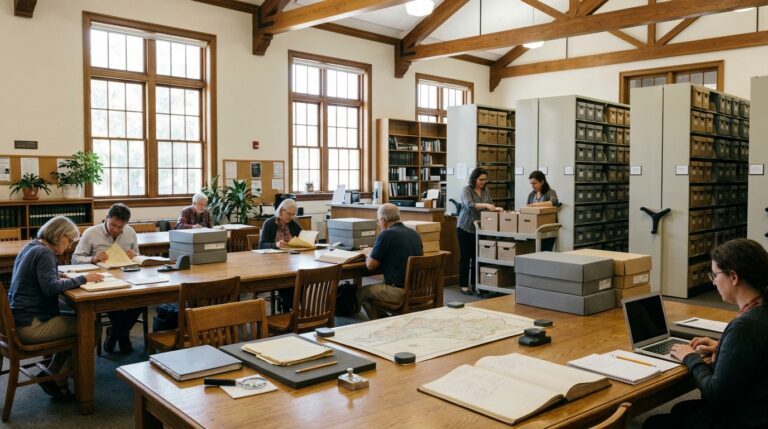
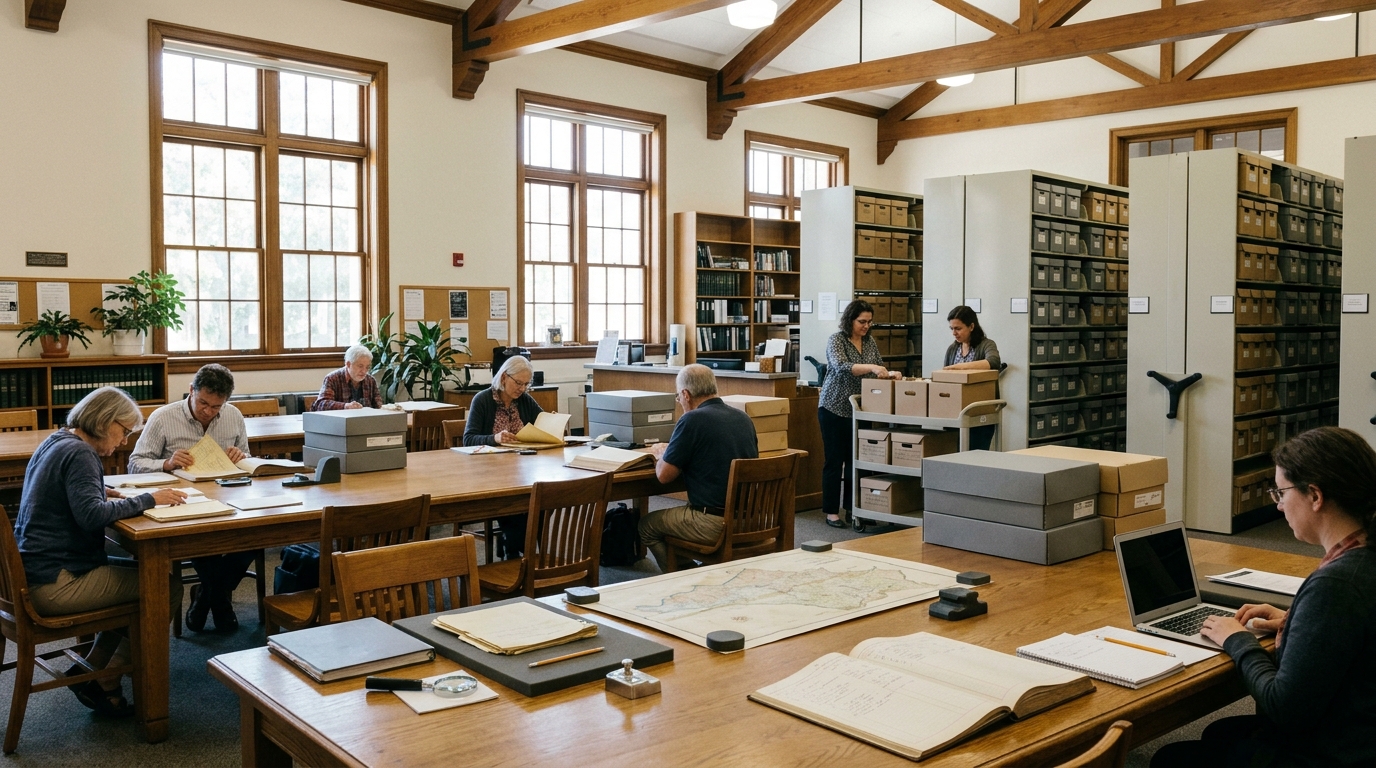
The Riverside County Archives 2026 visitor update brings welcome news for residents, students, family historians, and property researchers. Beginning October 5, the Robert J. Fitch County Archives started welcoming visitors during regular public hours without requiring appointments.
The change makes historical research more accessible in downtown Riverside. Visitors can explore records that reveal how local communities developed, how property ownership changed, and how county government evolved.
Riverside County announced the expanded access on October 1, 2026. The archives now operates on the second floor of the County Administrative Center at 4080 Lemon Street.
Whether you want to research a historic property, investigate local history, or explore old maps, the updated visitor policy creates new opportunities. This guide covers operating hours, available records, research tips, and ways to plan a productive visit.
What’s New at the Riverside County Archives in 2026?
The biggest change is simple: visitors no longer need to reserve an appointment before visiting during normal research hours. Previously, appointments helped the archives manage access to its collections.
The new walk-in policy follows the archives’ move to the County Administrative Center. County officials say the relocated facility supports both historical preservation and public research.
However, the expanded access does not mean every historical document is available immediately. Some materials may require staff assistance, special handling, or additional research time.
Location, hours, and what visitors should expect
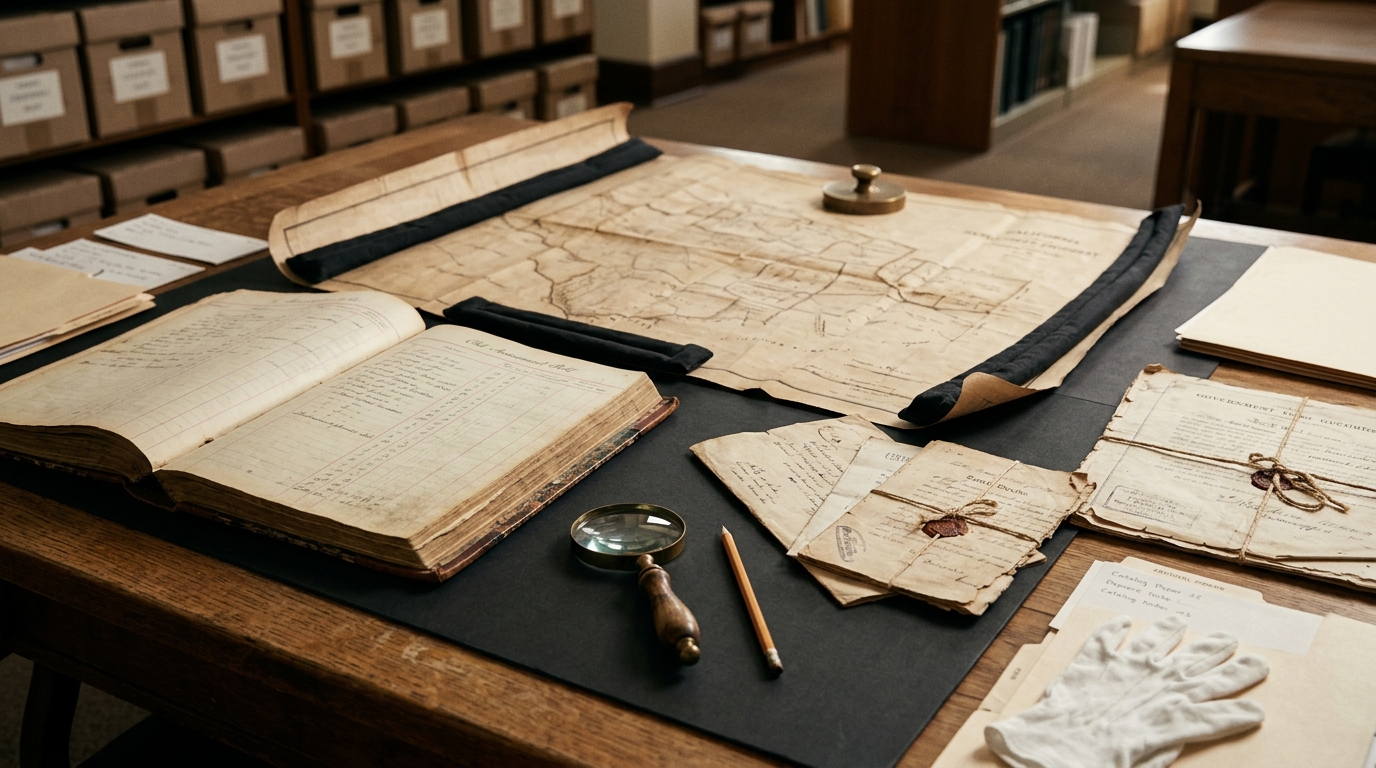
The Robert J. Fitch County Archives is located at 4080 Lemon Street, second floor, Riverside, California 92501.
Its regular public research hours began Monday, October 5, 2026. The archives welcomes visitors Monday through Thursday, from 9:00 a.m. until 3:00 p.m.
Visitors do not need an advance appointment during these hours. However, contacting staff before a specialized research trip may still help.
The archives provides assistance with locating historical materials. Staff can explain how collections are organized and which records may be relevant to a particular subject.
How to prepare for your first archives visit
Start by identifying one clear research question. For example, you might want to learn who owned a parcel during a particular decade or how an area appeared on an early map.
Bring important names, approximate dates, locations, and any document references you already possess. This information can help staff identify relevant collections.
Visitors should also bring a camera or smartphone. The county’s archives website explains that researchers may photograph permitted materials without flash.
The research room does not provide a photocopier, so visitors should plan their documentation method before arrival.
Check the official Riverside County Archives contact page for current hours and visitor instructions.
Why removing appointments matters for public access
Appointment requirements can make spontaneous research difficult, particularly for students and residents with limited schedules.
Walk-in access gives more people a chance to explore local history during regular public hours. Someone working on a class project can visit without coordinating an appointment first.
Property owners can also begin researching older records when they need historical context for a building or parcel.
However, visitors should remember that archives research takes time. Locating an old document may involve several indexes or related records.
Arriving early gives researchers more opportunity to review materials before the facility closes.
Which historical records can you research?
The archives preserves more than a century of county records. Its collections document government activities, property ownership, development, and other aspects of Riverside County’s past.
According to the county, important holdings include historical property ownership records, assessment rolls, maps, land patents, and mining and water claims.
These collections support research beyond family history. They can also help residents understand how neighborhoods, agricultural districts, and public infrastructure changed.
Still, researchers should not assume that every record from every agency or period appears in one collection. Staff can help explain the scope of available materials.
Property maps and ownership records for local research
Historical assessment rolls can provide clues about property ownership and assessed values during particular periods.
Old maps may show street layouts, parcel boundaries, and development patterns that differ from today’s landscape.
Land patents and related materials can help researchers investigate earlier land transfers, depending on the property’s history.
For example, someone studying an older Riverside neighborhood might compare historical maps with modern parcel information. That comparison may reveal changes in roads, subdivisions, or property use.
However, archival materials do not automatically establish current legal ownership or property boundaries.
For present-day records, visitors should also consult the Riverside County Assessor–County Clerk–Recorder.
A licensed surveyor or qualified legal professional may be necessary when a question involves disputed boundaries or property rights.
How to Use Riverside County Archives for Local History Research
Historical archives become most useful when researchers combine a clear question with reliable documentation.
Before visiting, write down the subject you want to investigate. Then list the names, places, dates, and events that might connect to it.
This preparation helps you spend less time guessing where to begin. It also makes conversations with archives staff more productive.
Different research projects require different types of documents. A family history project may begin with names and dates, while a property study often starts with an address or parcel reference.
Research family history, communities, and development
Riverside County has a rich history involving agriculture, transportation, settlement, public works, and community growth.
Historical county records can provide details about the administrative decisions and property changes that shaped this development.
A student researching a neighborhood might look for older maps and compare them with modern streets. A local historian might examine government records from an important period of growth.
Family researchers may also find useful clues in property and land documents, although these records cannot replace every type of genealogical source.
How to organize findings and verify historical facts
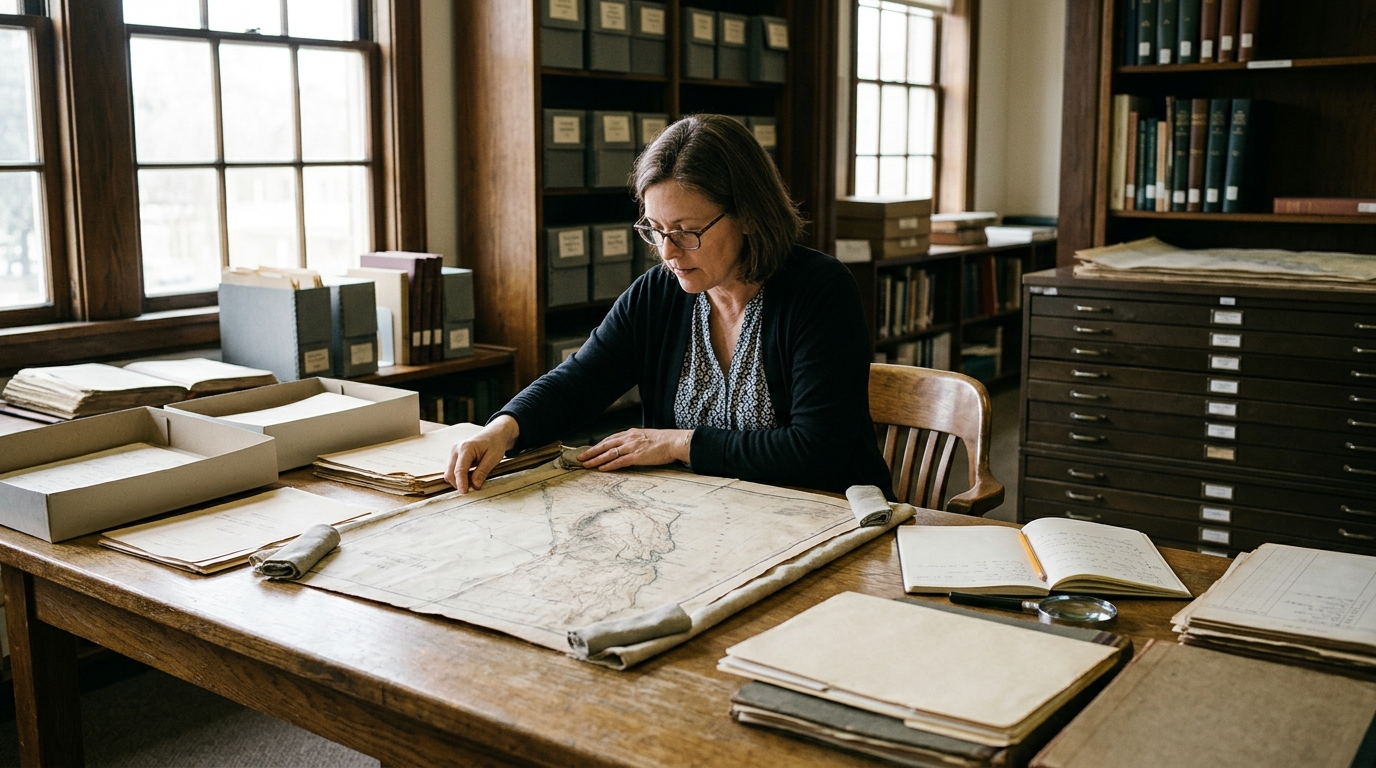
Use a simple research log to track every document you examine. Record its title, date, collection reference, and the information it provides.
When photography is permitted, take clear images that include document headings or identifying details. Avoid flash photography and follow staff instructions.
Next, compare information from multiple sources. An old map may use a former road name, while a more recent document uses its present name.
Similarly, a historical record may include outdated spellings or administrative terms. Do not automatically assume that two similar names refer to the same individual.
Document uncertainties instead of filling gaps with guesses. Careful source comparison produces stronger local-history research.
For detailed information about the archive’s expanded access, read the official Riverside County announcement.
Another useful practice involves distinguishing primary and secondary sources. A government record created during a historical event may serve as a primary source for certain facts.
A later article or book may provide useful interpretation, but it may rely on information from earlier documents.
Both types of sources have value. However, researchers should understand what each source directly establishes.
When building a timeline, arrange records in chronological order. Note when an ownership change, map revision, or administrative decision occurred.
This method can reveal patterns that are difficult to recognize when reviewing documents separately.
Students can use timelines to explain neighborhood development. Property researchers can use them to identify possible gaps in the historical record.
Local organizations may also find opportunities to document the history of public buildings, transportation routes, or community projects.
For instance, older assessment maps may help show how land use changed around agricultural areas as Riverside County expanded.
Researchers should avoid treating a single archival record as the complete history of an area. Government collections reflect the activities and responsibilities of the agencies that created them.
Community newspapers, photographs, oral histories, and library collections may provide additional perspectives.
Combining these sources can create a fuller account of local development.
Before a visit, check whether a holiday or special closure affects the regular schedule. The county’s published hours establish the standard timetable, not a guarantee of access on every date.
If you plan to travel from another part of Riverside County, consider contacting staff to ask about specialized materials.
You can reach the Robert J. Fitch County Archives at (951) 486-7327. The official website also lists its email contact.
Remember to treat fragile documents carefully. Historical records may require protective handling because of their age, condition, or format.
Follow staff instructions when viewing maps, books, photographs, or other archival materials.
Do not remove original items from the research room or attempt repairs yourself.
Visitors should also separate factual discoveries from personal interpretations. A map may clearly identify an old subdivision, but it may not explain every reason behind its development.
When preparing a school paper or community presentation, cite the specific records supporting each conclusion.
Good documentation also helps future researchers locate the same material.
The Riverside County Archives 2026 walk-in update makes local history more accessible to the public.
Its downtown location, regular research hours, and collection of government records provide a valuable starting point for learning about the region’s past.
Whether you want to explore a historic neighborhood, study property development, or research county history, a little preparation can make your visit more rewarding.
Start with a focused question, consult the official visitor instructions, and record your findings carefully.
With appointment-free access now available during public hours, Riverside County residents have another opportunity to connect with the documents that tell their community’s story.
Visitor note: Hours, research procedures, and document availability may change. Confirm current information with the Robert J. Fitch County Archives before making a special trip.