
Riverside is giving young people a direct opportunity to turn climate ideas into local projects. The City of Riverside is accepting applications for its 2026 Youth Climate Action Fund, a Bloomberg Philanthropies-supported program that will distribute $50,000 in microgrants for youth-led climate action. Applications are open to Riverside youth ages 15 to 24, with grants ranging from $1,000 to $5,000 and a deadline of September 25, 2026.
The program is designed for projects that connect to Riverside’s Climate Action Plan priorities, including clean energy, sustainable transportation, food systems, extreme heat, trees and civic engagement. That means a successful proposal does not need to be a massive environmental campaign. A focused neighborhood project, school-based initiative, youth education effort, shade or tree project, food-recovery idea, or sustainable transportation campaign may fit if it produces a clear local benefit.
For more local programs and happenings, visit our Events & Community hub or explore the Riverside Local Guide.
What Is the Riverside Youth Climate Action Fund?
The Youth Climate Action Fund is part of an international initiative backed by Bloomberg Philanthropies. Riverside was selected as one of 300 cities worldwide for the 2026-2027 cohort. The purpose is simple: give young people resources to design and deliver practical climate projects in the communities where they live.
For Riverside’s current round, the city has $50,000 in total funding available. Individual microgrants range from $1,000 to $5,000, and the city says up to 40 projects may be selected. Applications opened August 17 and close Friday, September 25, 2026.
Applicants do not have to solve every environmental problem at once. In fact, a smaller idea with a realistic plan, a clear audience and a measurable local result can be stronger than an overly ambitious proposal. The key is showing how the project supports one or more Riverside climate priorities and how young people will lead the work.
Who Is Eligible to Participate?
The youth participants leading projects must be ages 15 to 24. However, the money itself is not paid directly to an individual young person. Funds must be disbursed through an eligible organization that can receive and manage the grant.
Eligible recipients can include youth-led organizations, youth-serving organizations and sponsor organizations such as schools, educational institutions, museums, community organizations or qualifying public entities. The organization generally needs to be legally registered, recognized as a nonprofit or charitable organization unless it is a public entity, and have a bank account in its own name.
Private companies, individuals, political parties and party-affiliated organizations are not eligible grant recipients. The city unit managing the Youth Climate Action Fund also cannot serve as a sponsor organization for a project.
Why a Sponsor Organization Matters
For a student or informal youth group, the sponsor requirement may sound complicated, but it can actually strengthen a project. A school, nonprofit, museum or community organization can help with financial administration, purchasing, insurance, space, outreach and adult guidance while allowing young people to remain the project’s leaders.
A good first step is identifying an organization that already works with your intended audience. A school environmental club might work through its school or district. A neighborhood heat-safety project could partner with a community nonprofit. A food-recovery idea might make sense with an organization already connected to local food access.
What Types of Projects Fit Riverside’s Climate Priorities?
Riverside has identified six main priority areas for Youth Climate Action Fund proposals: energy, transportation, food systems, extreme heat, trees and civic engagement. These categories are broad enough to support many different project ideas while keeping the work connected to local climate goals.
Energy projects might focus on efficiency education, renewable-energy awareness or community-scale clean-energy ideas. Transportation projects could encourage walking, bicycling, rolling, transit or zero-emission mobility. Food-system projects might address food recovery, urban agriculture, climate-resilient growing or community food education.
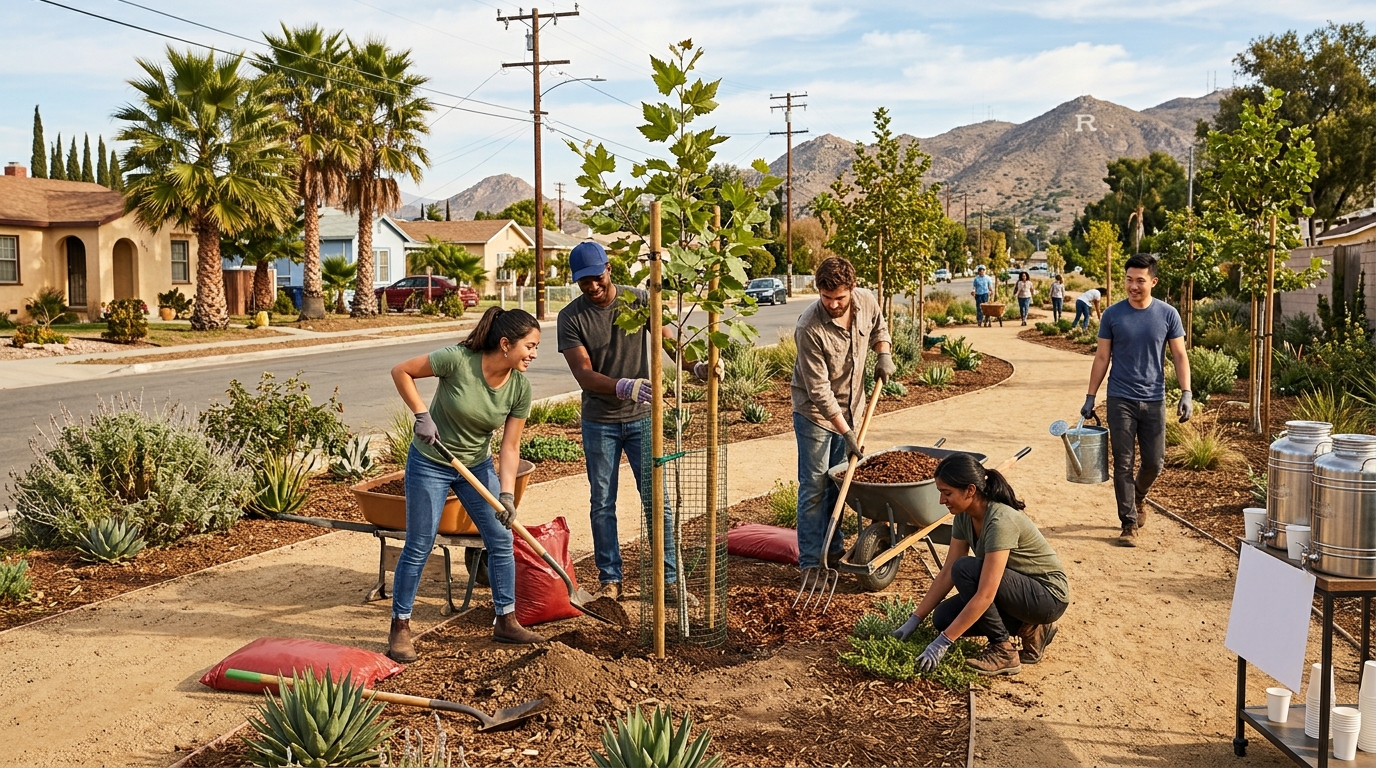
Extreme-heat projects are particularly relevant in inland Southern California. Youth teams could develop heat-safety outreach, cooling-resource information, shade initiatives or neighborhood resilience projects. Tree-related proposals can support planting, care, education or urban-forest awareness. Civic-engagement projects can focus on youth leadership, outreach, education and public participation around climate action.
Examples of Small Projects That Could Make Sense
Imagine a student team mapping the shadiest walking routes near a school and creating a heat-safety campaign. Another group could organize a food-waste education project with a local community organization. Youth might create a bicycle-safety and sustainable transportation event, develop a native-shade-tree education campaign, or build workshops around household energy efficiency.
Those examples illustrate the scale a microgrant can support. The application should explain the problem, activity, audience, budget and expected result.
Applicants should review the city’s eligible and ineligible expense guidance before building a budget. Spending rules matter, and a creative idea can still run into trouble if its proposed purchases are not allowed under the program.
Think Local, Specific and Measurable
A proposal titled “Fight Climate Change in Riverside” is too broad to explain what will actually happen. A project focused on helping one neighborhood prepare for extreme heat is easier to understand, budget and evaluate.
Try defining a specific audience and result. How many people will participate? Will trees be planted or maintained? Will residents receive heat-safety materials? Students attend workshops? Will food be recovered instead of discarded? Transportation event produce sign-ups, surveys or educational materials?
How to Apply Before the September 25 Deadline

The City of Riverside requires applications to be submitted through its Survey123 application. The downloadable English and Spanish application PDFs on the city’s website are reference copies, not the final submission method. Applicants should use those materials to prepare their answers and then submit through the online application.
As of early September, the city is also offering drop-in office hours on September 10, September 16 and September 21, from 4 to 5 p.m. These sessions give applicants a chance to ask questions before the deadline. Because schedules can change, verify the latest session information before joining.
The official City of Riverside Youth Climate Action Fund page contains the application link, reference materials, eligibility guidance and current program updates.
How to Build a Stronger Application
Start with the local problem, not the grant amount. Explain what you see in Riverside that could be improved and why your project is a reasonable response. Then describe the activity in plain language. Reviewers should be able to understand what your team will do without decoding technical language.
Next, connect the project directly to at least one of Riverside’s six climate priorities. If it fits several, explain the connections without stretching the idea just to check more boxes. A focused tree-and-heat project, for example, may naturally address both urban forestry and extreme-heat resilience.
Create a realistic budget. A $5,000 proposal is not automatically better than a $1,500 proposal. Ask for the amount the project actually needs and make sure each expense supports a specific activity. Coordinate early with the sponsor organization because it will be responsible for receiving and administering funds.
What to Do Before You Hit Submit
Before submitting, confirm that every team member who must meet the youth requirement is within the eligible age range, that your sponsor organization qualifies, and that the proposed expenses follow the program rules. Have someone outside the team read the application and explain the project back to you. If they misunderstand it, the proposal may need clearer language.
Do not wait until the final hour to identify a sponsor or prepare the budget. September 25 is the application deadline, so the remaining weeks are better used for refining a realistic proposal and getting organizational approvals than rushing through administrative details.
The city notes that its awardee orientation date has been updated to October 15. Applicants should continue checking the official program page after submission for any changes to orientation, award notifications or project instructions.
Applicants
Riverside’s Youth Climate Action Fund is notable because it places young people in the role of project designers rather than simply participants in an adult-created program. That makes the microgrants a chance to gain practical experience in planning, budgeting, partnership-building, public communication and community leadership while addressing a real local issue.
For funded teams, the bigger opportunity is proving that a relatively small grant can produce a visible neighborhood benefit.
Riverside Beacon will continue covering programs that connect residents with the city’s changing environmental and community landscape. You can also browse our City Life coverage, visit Events & Community, or read our guide to Things to Do in Riverside in September 2026 for more current local ideas.