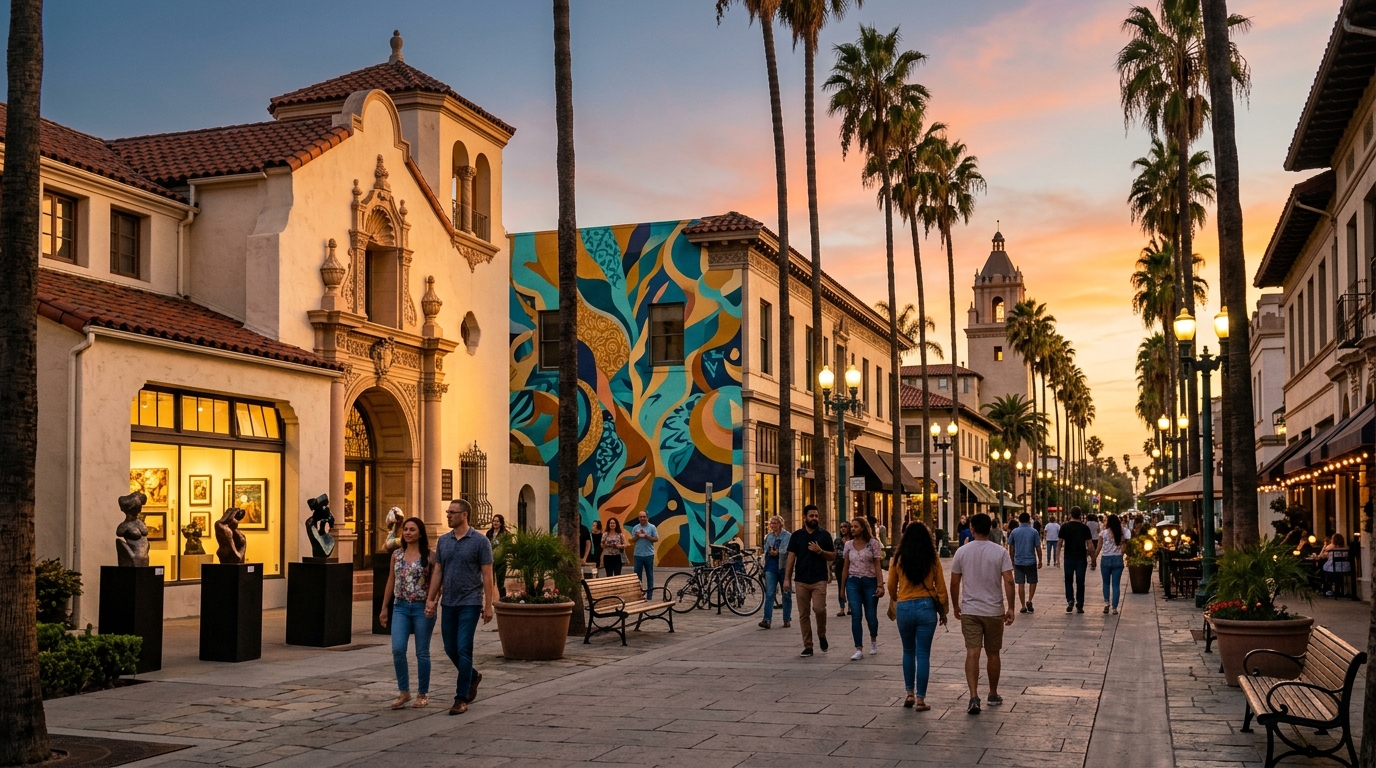
Downtown Riverside has long been home to museums, galleries, historic architecture, public art, performance spaces, restaurants and recurring cultural events. In 2026, that creative identity received statewide recognition when Riverside’s Arts and Culture District, commonly called The ACD, officially became a California Cultural District.
The designation is more than a new label for downtown. It places Riverside within a statewide network of communities recognized for concentrated cultural activity, distinctive local identity and the ability to use arts and culture as tools for community connection and economic vitality. Riverside’s designation runs from 2026 through 2030, giving the city a five-year period to strengthen the district, promote local artists and organizations, and introduce more people to Riverside’s cultural offerings.
For residents and visitors, the practical question is simpler: what does the Arts and Culture District offer, and why is it worth exploring? This Riverside Beacon guide explains the state designation, what makes the district important and how to experience Riverside’s creative downtown for yourself.
If you are building a full Riverside itinerary, also explore our Things to Do in Riverside hub, browse our Events & Community page, or start with the complete Riverside Local Guide.
Why Riverside’s California Cultural District Designation Matters
The California Arts Council announced a new group of 10 state-designated Cultural Districts for 2026, including Riverside’s Arts and Culture District. The designation period runs through the end of 2030 and expands a California program originally established to identify and support places with strong concentrations of arts, culture, heritage and creative activity.
Riverside’s selection followed a competitive process involving applications, community support, cultural asset inventories and site visits. The California Arts Council ultimately approved the designation, recognizing Riverside alongside cultural districts in communities including San Diego, Oakland, San Francisco, Modesto, Oxnard, San Jose, Merced, Watsonville and Los Angeles.
According to the City of Riverside, the designation also brings $10,000 in funding during a two-year period, technical assistance and access to shared marketing and branding resources. Those benefits may sound modest compared with a major construction grant, but the larger value lies in statewide recognition and the opportunity to coordinate Riverside’s cultural institutions under a clearer identity.
What Is a California Cultural District?
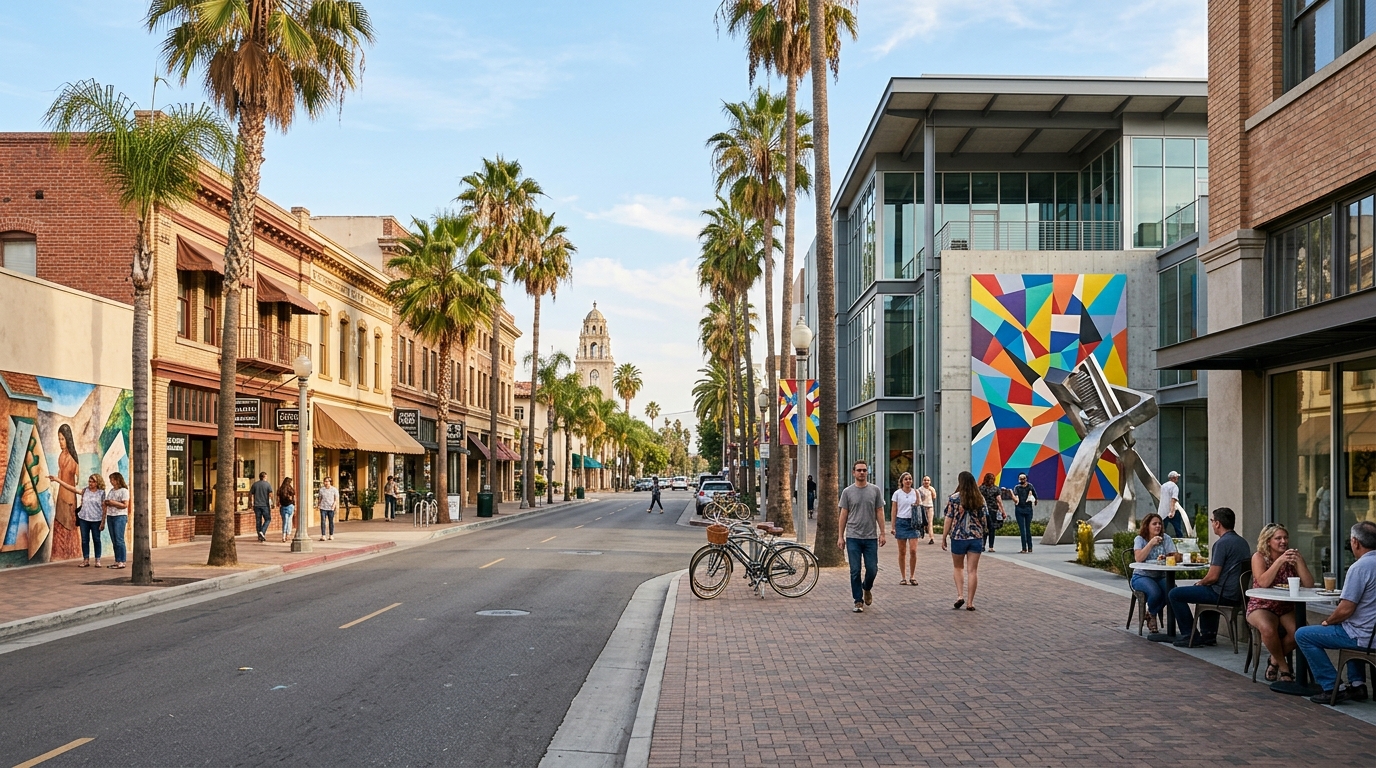
A California Cultural District is a defined geographic area with a strong concentration of cultural resources and activity. That can include museums, galleries, theaters, public art, architecture, artists, cultural organizations, historic places, creative businesses, events and community traditions.
The state program was created through Assembly Bill 189 and is administered by the California Arts Council. Its broader goals include increasing the visibility of local artists, encouraging participation in arts and culture, protecting historic and cultural resources, supporting creative economies and strengthening communities without losing the character that made them culturally significant in the first place.
That last point is important. A cultural district should not simply become a marketing name placed on a downtown map. Its value comes from the people, institutions, history and creative activity that already exist there.
Riverside Joined Only 10 New Districts in 2026
Riverside’s selection places it within a relatively small statewide group. The California Arts Council announced only 10 new districts for the 2026 designation cycle, meaning The ACD was chosen from a larger field of communities seeking recognition.
The City of Riverside said the California Arts Council highlighted the city’s durable partnerships, cultural assets and collaboration among different sectors. The state’s review also recognized Riverside’s efforts to build a cohesive vision around its local cultural identity.
For readers interested in the statewide program, the California Cultural Districts website provides official information about the designation program and participating districts.
What Makes Downtown Riverside a Natural Arts and Culture District?
Riverside did not suddenly become an arts destination in 2026. Downtown has been developing its cultural identity for decades. Historic architecture, museums, performance venues, educational institutions, galleries and public spaces are concentrated within a relatively walkable part of the city, making it possible to experience several types of culture without traveling across the entire region.
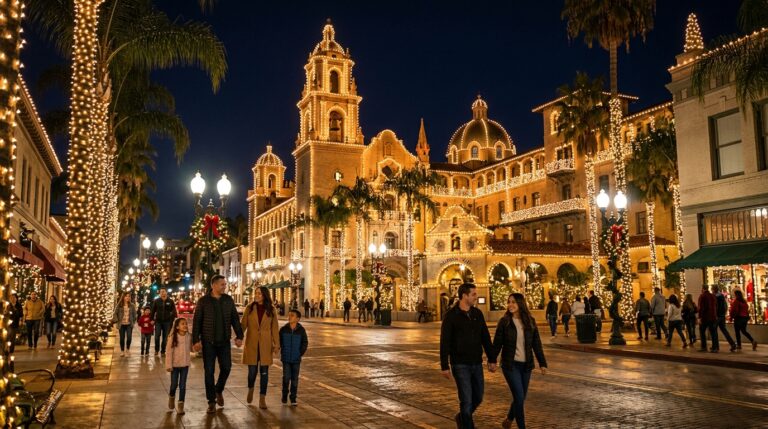
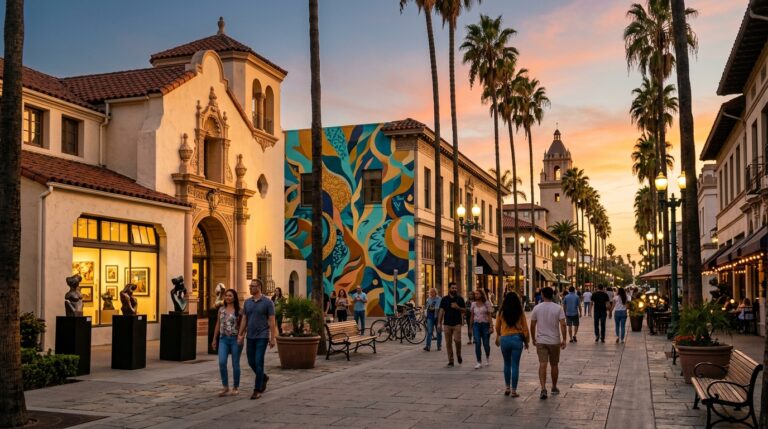
The area’s visual identity is also unusually strong. Mission Revival and Spanish Colonial-inspired architecture, historic commercial buildings, palm-lined streets and public art create a setting that feels distinctly Riverside. The district benefits from this combination of architecture and cultural programming because visitors experience art not only inside institutions but also while moving through downtown.
Museums, Galleries and Historic Places Create the Foundation
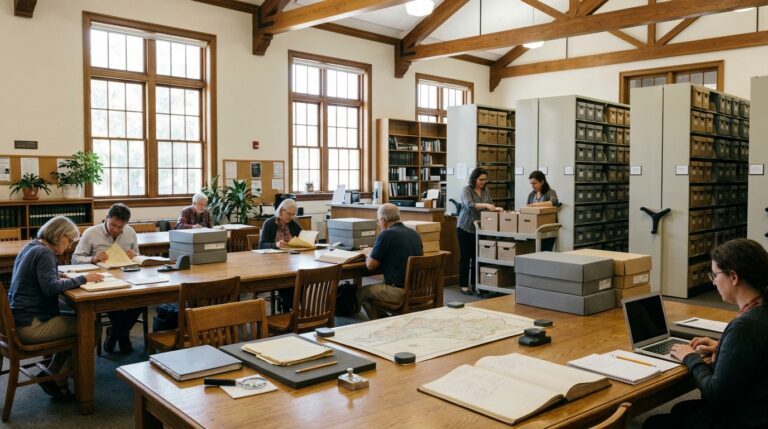
One of the district’s greatest strengths is the variety of cultural experiences located close together. Museums and galleries give visitors opportunities to explore visual art, photography, regional history and changing exhibitions, while historic buildings connect downtown to Riverside’s architectural and civic story.
The Riverside Art Museum and other cultural institutions contribute to the visual arts scene, while nearby historic architecture gives the area an identity that cannot easily be recreated in a newer commercial district. Public art, murals and artist-designed spaces add another layer outside traditional museum walls.
This concentration makes downtown useful for both serious arts visitors and people who simply want an interesting afternoon. You can visit an exhibition, walk a few blocks to see historic architecture, stop for coffee and encounter a mural or public artwork without planning every minute in advance.
Riverside’s broader history also helps deepen the experience. Heritage House, for example, connects local arts and decorative culture to the city’s late nineteenth-century past. Read our guide to Gilded at Heritage House for another look at how Riverside uses historic places to interpret art and culture.
Artswalk Helps Put Local Creativity on the Street
Riverside Artswalk is one of the easiest ways to understand the district in action. The recurring first-Thursday event brings together galleries, museums, artists, vendors and performances around downtown, encouraging visitors to move between venues rather than remain inside one building.
That format matters because cultural districts work best when the streets themselves feel active. A successful arts district is not only a collection of institutions; it is an environment where visitors encounter creative activity while walking, eating, shopping and spending time in public spaces.
Artswalk also gives independent artists and smaller creative organizations visibility alongside larger institutions. For someone new to Riverside’s arts scene, attending one Artswalk can provide a quick introduction to several galleries, artists and cultural spaces that might otherwise be easy to miss.
If you are visiting this month, our September 2026 Riverside events guide includes additional current ideas for combining downtown arts with history and outdoor activities.
How to Explore Riverside’s Arts and Culture District
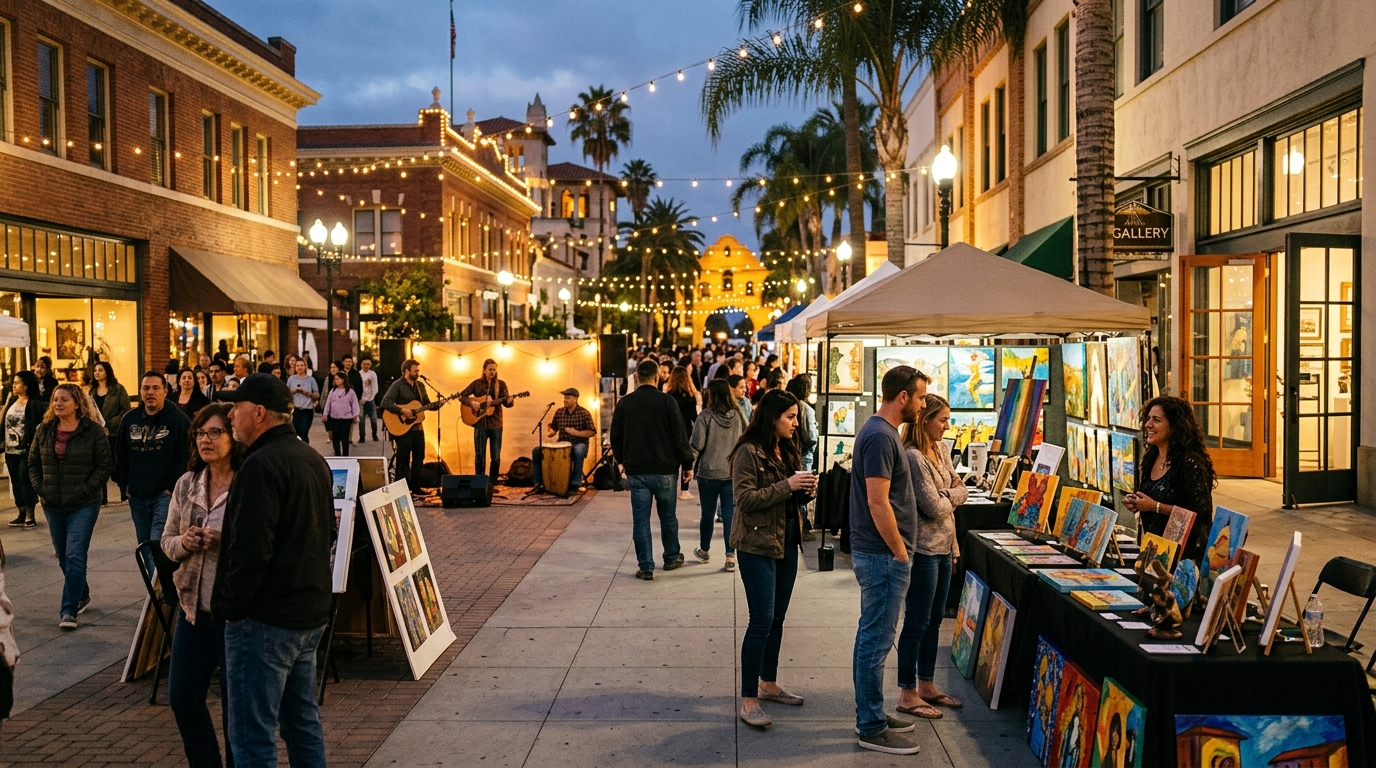
The best way to experience The ACD is not to treat it like a single attraction with an entrance gate. Think of it as a walkable collection of places and experiences. Choose one or two anchor destinations, then give yourself time to explore the streets between them.
A museum exhibition can be your starting point, but leave room for architecture, public art, coffee, lunch or an unexpected gallery. The district works particularly well for visitors who enjoy combining cultural activities with food and neighborhood exploration.
Build a Half-Day or Full-Day Downtown Arts Itinerary
For a half-day visit, begin in the late morning with a museum or gallery. Spend an hour or two exploring exhibitions, then walk through the surrounding downtown streets and look for murals, historic facades and public artworks. Stop at a locally owned cafe or restaurant for lunch before visiting a second cultural institution or historic site.
If you have a full day, expand the itinerary rather than rushing. Add another museum, attend an afternoon program, spend time around Main Street, and stay downtown for an evening performance, Artswalk or community event when one is scheduled.
Use our Riverside Food & Drink guide to find places to pair with your cultural stops. Combining food with art is also useful for local businesses because a cultural district works economically when visitors spend time throughout the area instead of entering one venue and immediately leaving.
Look Beyond the Major Institutions
Major museums may be the most obvious destinations, but the smaller discoveries are often what make a cultural district memorable. Look for independent galleries, murals, artist markets, temporary exhibitions, performance programs, architecture, creative businesses and community events.
Also pay attention to Riverside’s historic streetscape. Buildings tell part of the district’s story even when they are not museums. Architectural details, preserved facades and adaptive reuse show how downtown has changed while retaining pieces of earlier Riverside.
Our Riverside Neighborhoods guide can help place downtown within the larger city, while the History & Heritage section explores the people and places that shaped Riverside beyond the arts district.
The state designation may also help Riverside attract more cultural tourism. Someone searching California’s official Cultural District network can now discover Riverside alongside better-known arts destinations elsewhere in the state. That additional visibility creates an opportunity for museums, artists, restaurants and local businesses to benefit from visitors who might otherwise pass through the Inland Empire without stopping downtown.
long-term outcome
At the same time, the strongest long-term outcome would be one that benefits residents and working artists, not only tourists. Cultural districts need active local participation, accessible programs and opportunities for artists to create and present work. State recognition is valuable, but Riverside’s cultural identity will ultimately depend on whether the district remains useful and welcoming to the people who live here.
The five-year designation gives Riverside time to build on what already exists rather than reinvent downtown. Strong institutions, recognizable architecture, recurring Artswalk events, public art, creative businesses and a growing network of cultural partnerships provide a solid foundation.
For visitors, that means 2026 is an especially good time to explore. Start with one museum or exhibition, walk instead of driving between every stop, notice the architecture and murals, support a local restaurant, and check the calendar for programs happening while you are downtown.
California Cultural District status gives Riverside a larger platform, but the real value of The ACD is still found at street level: in galleries, historic buildings, performances, public art, community gatherings and the people creating Riverside’s cultural life.
Continue exploring with Riverside Beacon’s Arts & Culture stories, our Events & Community guide, and our complete Riverside Local Guide.